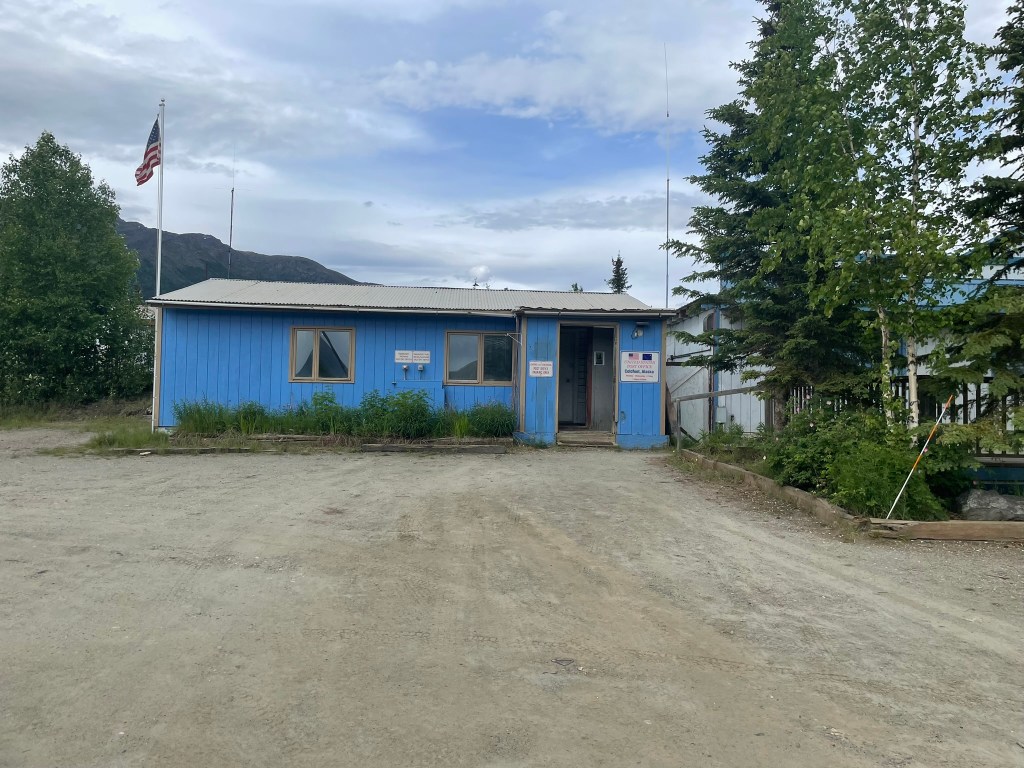
I’ve never done much riding in the dirt. I have been routing and leading group street rides for a long time, and it’s a running joke with folks with whom I’ve ridden that there will inevitably be a dirt road somewhere during a ride I lead. It comes from a long ago habit of finding squiggly lines on a paper map and hoping it will be fun at a spirited pace – but also hoping for pavement. Most times yes, occasionally, no. Never a big deal, since they don’t typically last more than a few miles, and our street bikes can handle a little dirt (although there is an inverse correlation between an rider’s willingness to try, and how shiny his bike was).
So when Mitch pitched this bucket list trip, including the Dalton Highway (or Haul Road as it’s sometimes known), I was more concerned with the size of the trip, than the road surfaces. Mitch wanted the adventure to begin “at the end of my driveway, on my adventure bike” rather than with a flight to Denver or Seattle and rented bikes, an argument I understood and could relate to…it just meant more miles and more time, so it was a thing. But dirt? Sure, there would be some dirt roads, but we were going on adventure bikes, so….
The Alaskan pipeline was built in the mid-70’s to bring Alaskan Crude from the pristine wilderness of northern Alaska down 640 miles to Valdez, where it is stored, then put on tanker ships. The pipeline meanders along it’s path so as not to disturb rivers, wildlife or geographic features, so it’s actually 800 miles long, and 4 feet in diameter. It was hugely controversial when built, delayed 5 years, but ultimately completed quickly once begun. Let’s face it – we had a huge appetite for oil in the 70s, especially if it didn’t come from OPEC. The project took tens of thousands of workers and created boomtowns and worker towns. The Dalton Highway was created simultaneously, so trucks could bring materials, equipment, supplies and workers to the project. The Highway is maintained to this day, solely to support the pipeline and the towns it created. Tourism is rather scant and unsupported. So when they call it a highway, it’s euphemistic. It’s really just a really long, gravel road in the middle of nowhere.
Riding the Highway is typically tackled in four days, although it can be done in two or three, if you don’t value sleep or your sanity. The first day is Fairbanks to Coldfoot, a leftover worker town that now services truck drivers and working crew in the original temporary housing structures from the 70s. The road to Coldfoot consists of 250 miles, some of it paved. It’s an inhospitable environment, north of the Arctic Circle, so before heading north from Coldfoot, you confirm weather for next two days, getting to and from Deadhorse/Prudhoe Bay, paying special attention to weather in Atigun Pass – the highest elevation along the haul road. The fourth day is the final 250 back to Fairbanks, from Coldfoot.
When day 20 of our adventure arrived, we had already made the decision to go. We had a nice weather window, and had secured housing for both Coldfoot and Deadhorse. We left out of Fairbanks with full tanks, lugged tires and restless minds. Reading and recommendations had created a rough sketch, but this was to be a keystone for our ride – take the highway to the northern most point in North America accessible by road, by motorcycle. We knew what to expect for some of it, or thought we did.
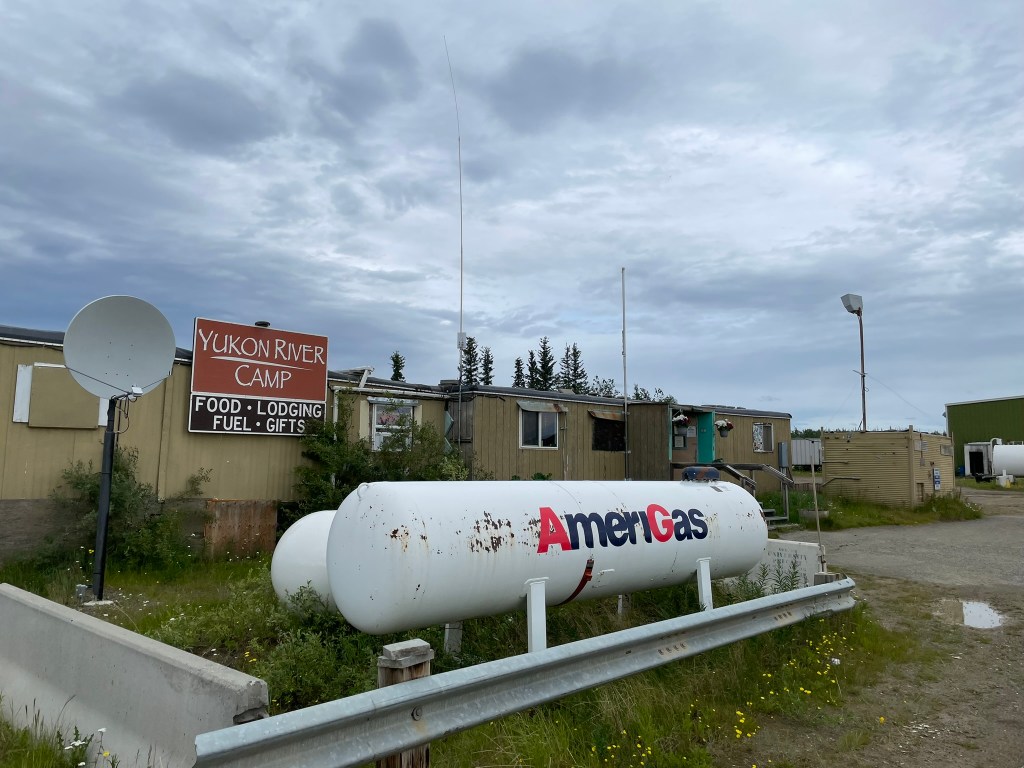
We were surprised to find on the first day, the Yukon River Camp, roughly half way to Coldfoot. Temporary housing for small tours, a cafe and fuel stop. The staff were friendly, but no food was being served before noon – so don’t ask. We arrived a bit before, so decided to wait. Tony and Mitch were treated to Salmon and potato soup, which was apparently pretty good. I played it safe with a chicken sandwich, but we all had the homemade cookies and banana bread before suiting up and continuing on to Coldfoot.
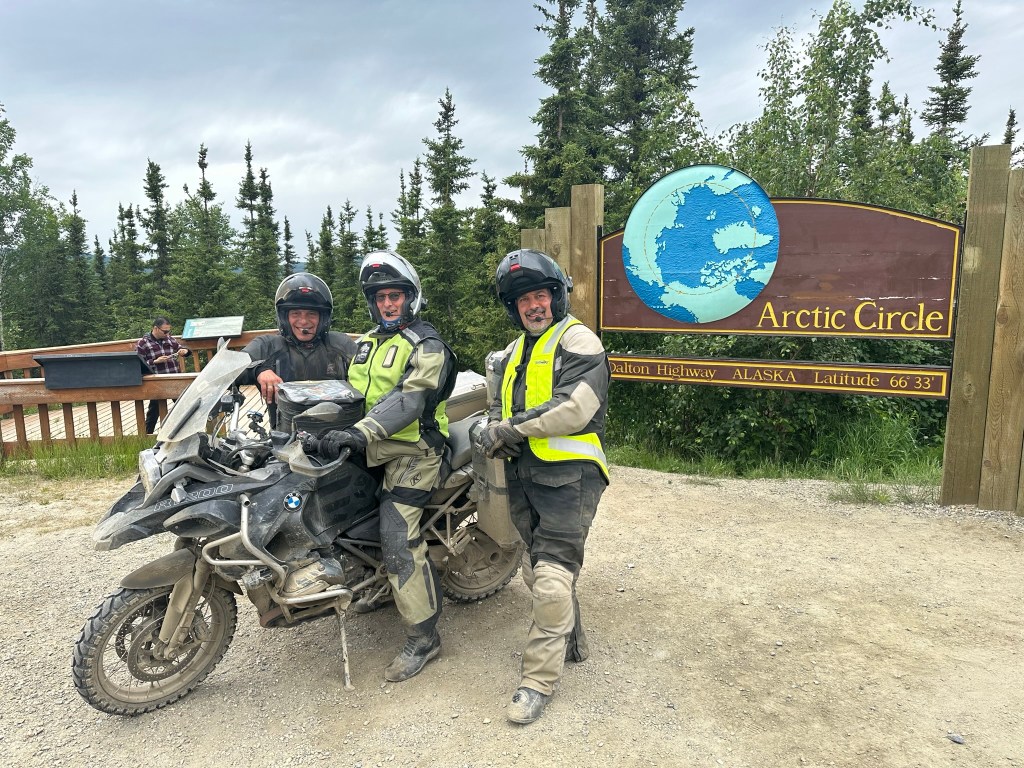
After Yukon River Camp we reach the Arctic Circle. A small turn off from the road, a sign, and a volunteer to answer questions and take your picture. We are beginning to understand the real issue with making the journey – mosquitoes.
The maintenance of the Highway is evident all along the way. Huge projects sprout up with crawling machines, lots of workers, and delays. A flagman holds us for sometimes 20 minutes, and it’s nearly impossible to lift the helmet visor, as the mosquitoes immediately swarm. We’ve brought nets, but they are tough to deploy taking off the helmet and putting on a net, without trapping the swarm inside with you, like some diabolical torture ritual. I’ve decided to douse my neck wrap with DEET, and it helps a bit, but I’m certain the concentration of fumes wafting up into my helmet means I’ll start sprouting a second head, but at least the hallucinations are fun. Stops for road work are a race between carbon dioxide poisoning in a helmet you dare not open, the heat buildup from your warm breath and the day’s sun, or the mosquitoes, which will drain your blood and your will in the time it takes to curse the whole damn trip.
Most construction projects require you to be escorted through by a pilot truck, which crawls over the loose, rocky ground at a pace that keeps him comfy (how’s that air conditioning, buddy?), but is slow enough that you almost drop the bike about every 10 feet. You wave to the pilot when you reach the end of the project and he moves over, but you’re adding him to the list of people you will curse from this section of the trip. There will be plenty.
Another challenge of the Highway are water trucks. These beasts wet down the dirt so less dust is raised. Dust on the haul road is like moisture-rich sea air on a boat. It gets everywhere, destroys everything, and doesn’t taste good, even though you have no idea how it got in your mouth. The water trucks lay down water and what we are told is calcium chloride. This unique combination creates a surface that is fine for trucks but quite treacherous for vehicles that turn by leaning, and that crash simply because of gravity. We all stay upright, but it makes every bit of the trip unnerving. All surfaces of the bike are covered in mud now, and we try to remember to clean off lights so we can be seen (no need to worry about night time…there is none this time of year in Alaska).
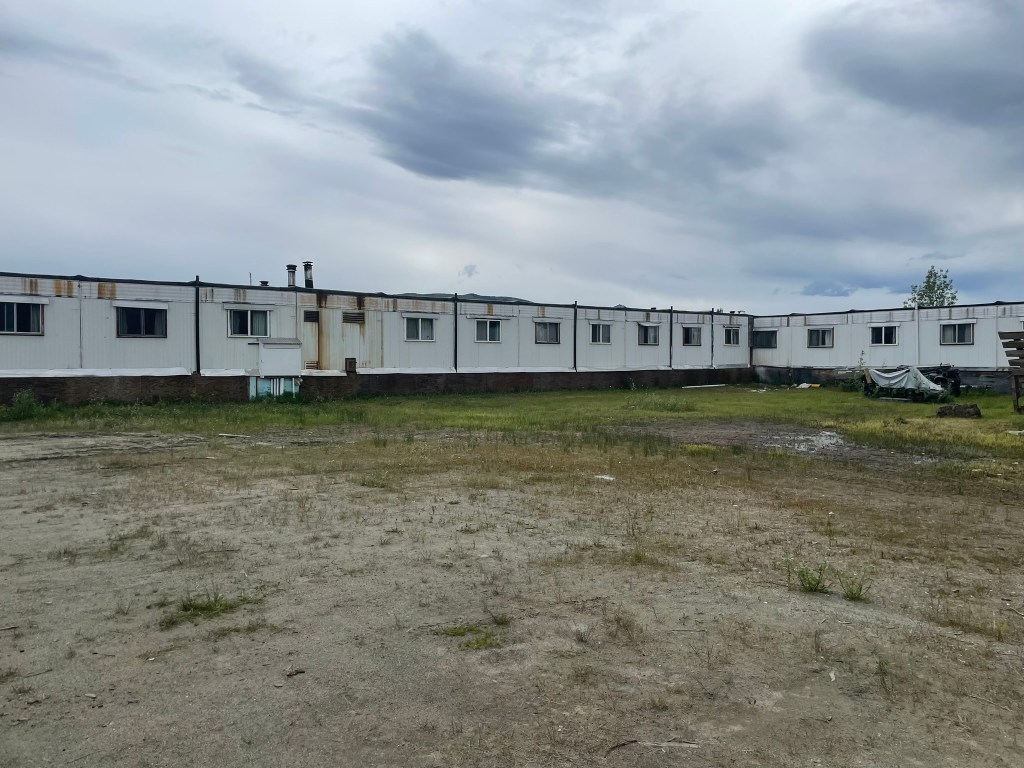
We finally arrive Coldfoot, and decide first order of business is to gas up, and we’re happy about that, as it seems they could run out of gas at any moment. We check in to our rooms, for $250/night per room, and they are hideous. Mitch, Tony and I have traveled all over the world, separately, and we all agree these are the worst accommodations we have ever paid for. Apparently, we are in the nicer rooms, as there is a bathroom ensuite, rather than down the hall, but it’s hard to feel special about it. Camping would be much preferred, except without a special tent to block out the sun, it never gets dark, and besides, the mosquito swarms carry off small children, so that’s a non-starter. For a price, the “camp” provides food and alcohol, but the lively conversation in the dining hall is free, with the other people stupid enough to have undertaken this folly. We meet a few who are doing it a second and third time and we wonder who hurt them earlier in life… We turn in early, dreading that we must stay here again in two nights.


 Dan's Travel Adventures
Leave a comment